Wii Hop
beta.yohop.com- contract
- 2025 to 2026
- Multi-tenant
- Seven roles
- Maps
- Web and Expo
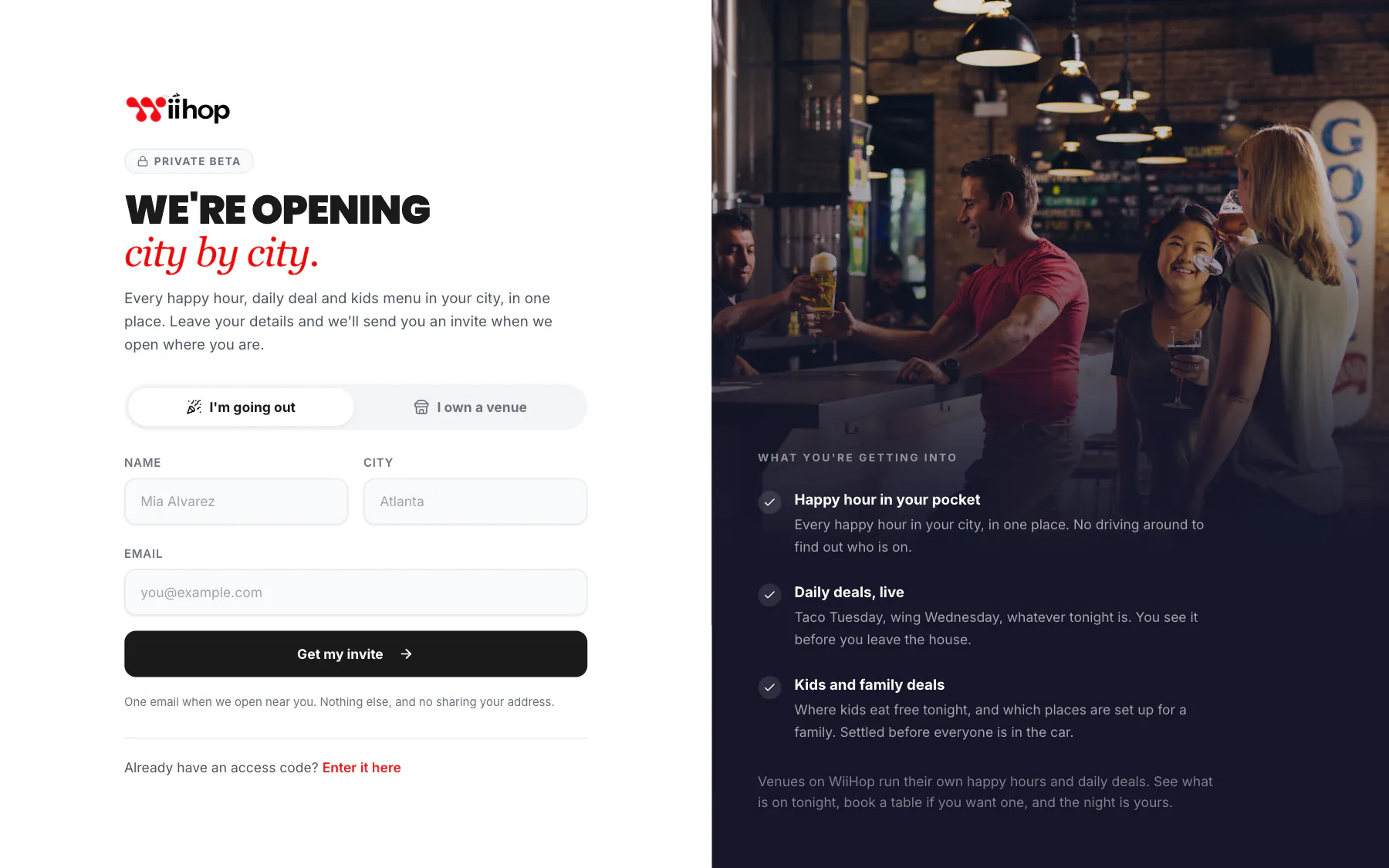
Wii Hop, formerly Yohop, is a US app for local deals, events, table booking and loyalty, with heists that turn a night out into a game.
On a contract from July 2025 to May 2026, I built most of the web app customers and merchants use, the multi-tenant data model and the auth middleware under it, the backend features where coins, stock and prices change hands, and screens for its Expo app.

- Type
- contract
- Role
- Software Engineer, contract
- When
- Jul 2025 to May 2026
- Stack
- React, TypeScript, Leaflet, Node, Prisma, PostgreSQL, Redis, Socket.IO, Expo
- Links
- beta.yohop.comThe web app
What I built
A multi-tenant data model
Every merchant's deals, stores, staff, menus, bookings and loyalty keyed and indexed by merchant in one Postgres, deleted with it.
How it worksSeven roles, checked twice
The auth middleware on the API and the matching route guards in the web app.
How it worksMost of the web app
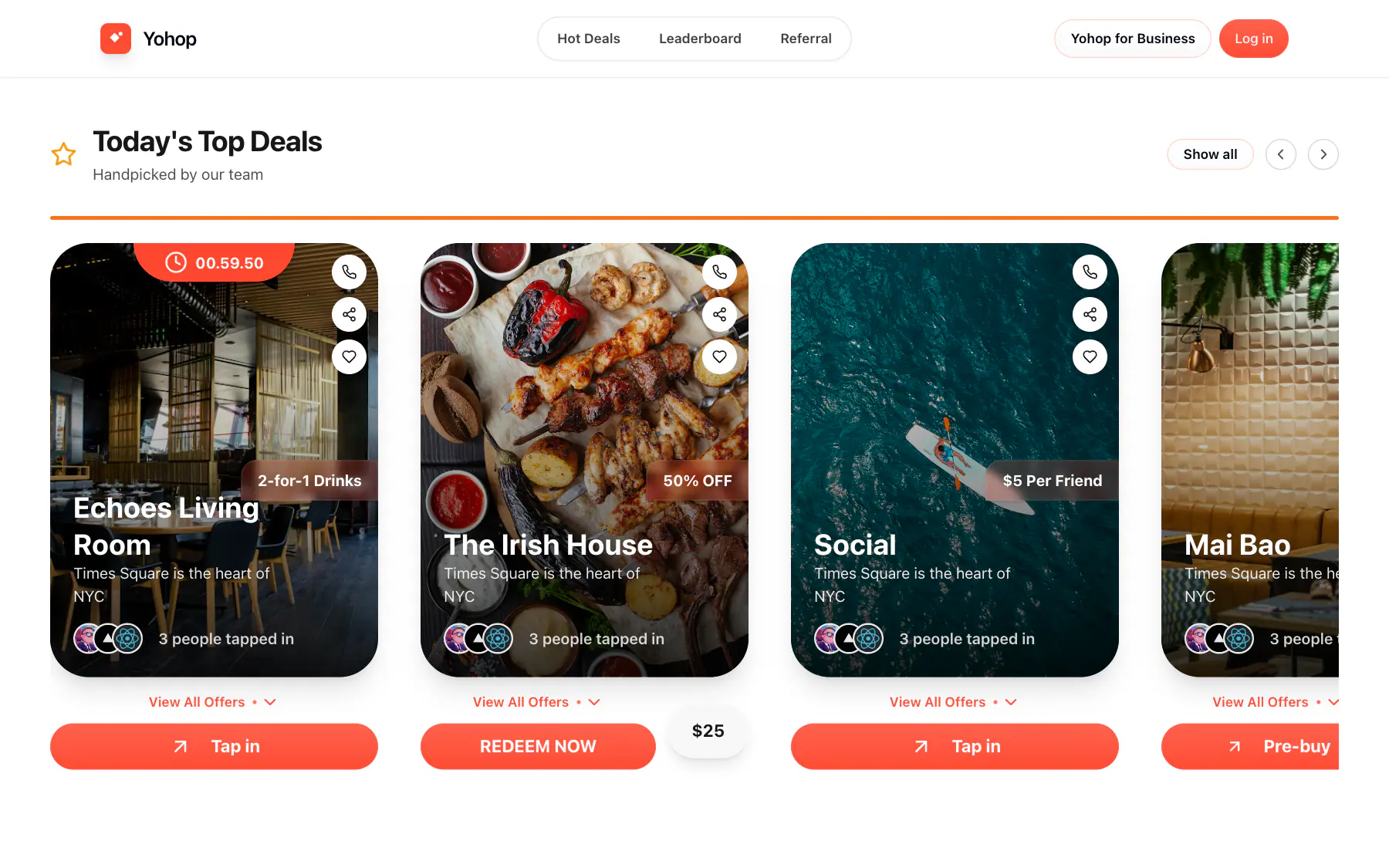
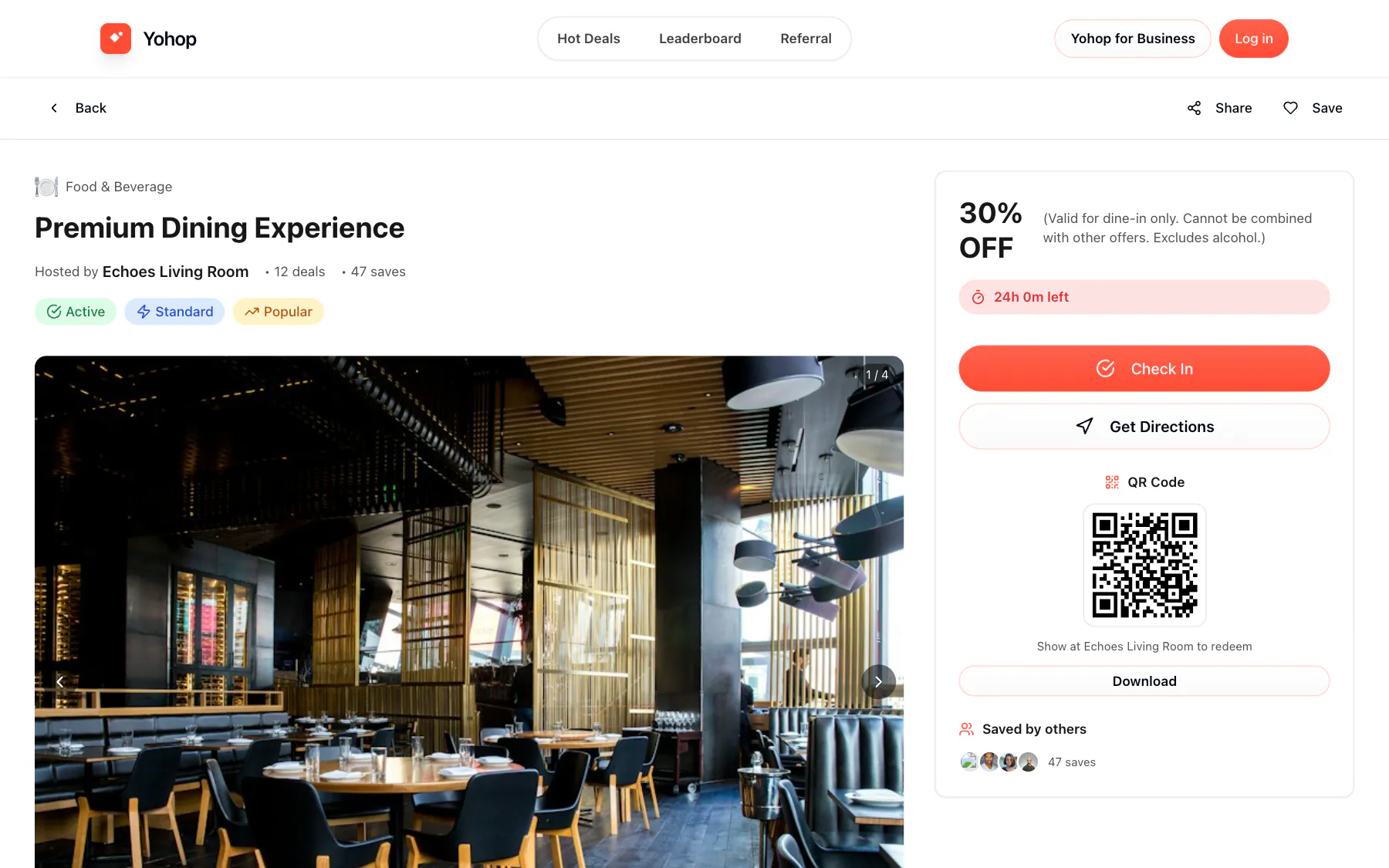
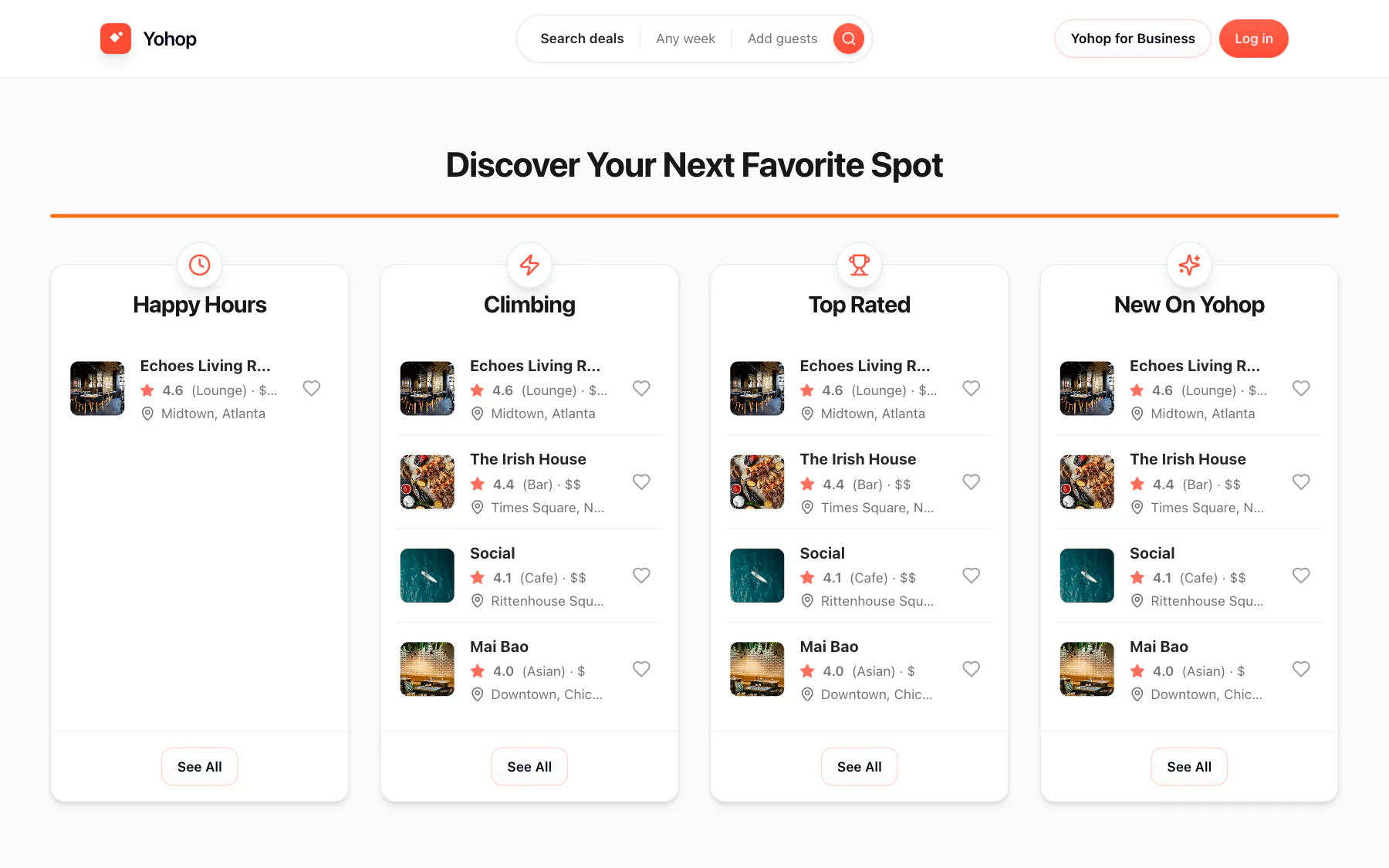
Deals on a live map, merchant onboarding, table booking, events, heists, loyalty and streaks: most of what a customer or merchant sees.
An eight-area admin console
Where the people running the platform manage it, across eight areas.
AI tools for merchants
The interface for seven of them, switched on together behind one feature flag.
The heist item shop
Players spend coins on items mid-heist, and the purchase lands inside the heist itself, so a coin is never half spent.
Events from SeatGeek
Nearby concerts and games pulled in by place, date and keyword, shown like the app’s own events.
Catering and bulk orders
Quotes priced on the server with stock checked line by line, and a restaurant can edit up to 200 menu items in one go.
The Expo app
About 40% of its interface: merchant tabs, onboarding, and the deal, event and menu editors.
How it fits together
One database, every merchant apart
Wii Hop is many businesses on one platform, so everything a merchant owns carries the merchant it belongs to: deals, stores, staff, menus, tables, bookings, orders and loyalty programs, 34 models in one shared Postgres, each keyed and indexed by merchant and deleted with it.
A route never trusts an id from the browser on its own: it finds the row by id and merchant together, so one merchant can never reach another's. The indexes lead with the merchant, so a dashboard reads only its own slice: deals by date, bookings by status and day, slugs unique per merchant.
Seven roles, checked twice
Users, merchants, admins, event organizers, vendors, event owners and super admins. On the API the token is checked first, then the role, then whether a merchant has been approved, before a handler runs.
The web app mirrors the same guards on its routes, so nobody is shown a page whose requests would be refused, and admin nudges pushed over WebSocket check who is asking before they send.
Deals on a live map
Deals sit on a Leaflet map that flies to where you are, from the browser's location kept for the session, and fits itself to the results. Merchants are onboarded by address, reverse geocoded to a point; distances use the haversine formula, and a check-in only counts within 100 m of the store. On Expo the same map runs with expo-location.
Money inside transactions
Coins, points and stock change hands inside database transactions, Serializable where two players could race: stealing points in a heist, checking in, claiming a reward. A claim also takes a Redis lock for 30 seconds, so a double tap can't claim twice.
Catering quotes are priced on the server, line by line against stock, and a restaurant can edit up to 200 menu items in one transaction. Nothing the browser says about a price is trusted.
What breaks first at 10× the traffic
Finding deals: today the approved merchants are loaded and measured in memory, fine for one city and the first thing to go at ten. Next comes a geospatial index with a bounding-box query, and markers clustered on the map. The nudge queue, in memory now, moves onto Redis so it survives a restart.