
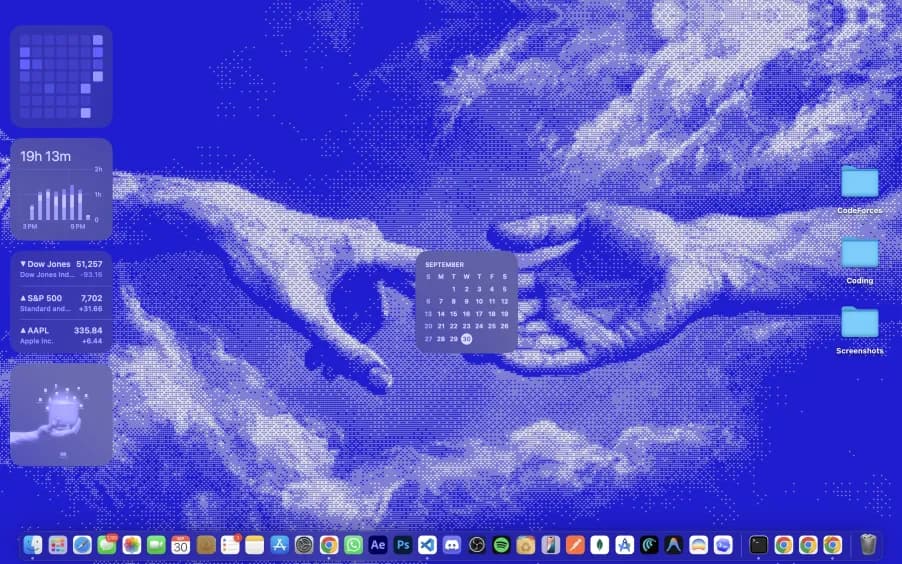
- On the screenMy desktop
- ReadingThe Design of Everyday Things
- Lamp
I’m Rajveer Singh, and I build AI products end to end.
I’m a software engineer in New Delhi. What I’ve shipped is on the projects page; this one is the rest: how I got here, how I work, and what I do when I’m not working.
I do my best work on small teams building AI products, where an engineer carries a feature from the first screen to the server it runs on, then watches it run. I also like working fast: in one week, our team took an AI engine from a plan to the top 0.1% of 22,000.

a lake you can fish in 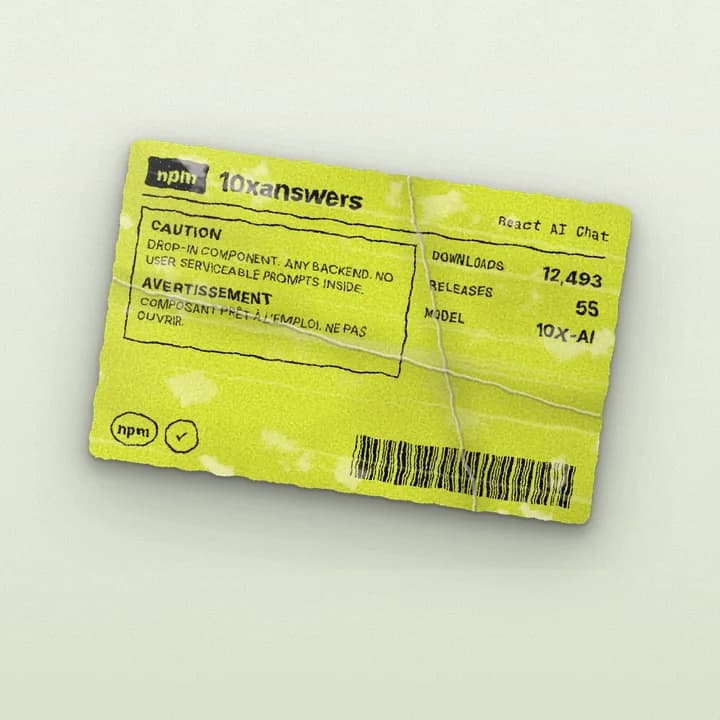
an AI chat on npm 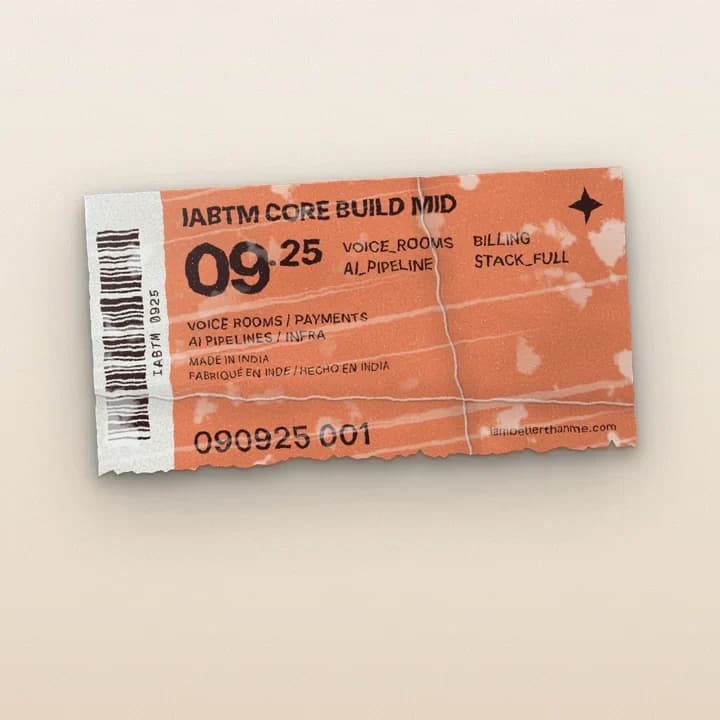
voice rooms at iabtm 
do not unplug 
first place, twice 
top 0.1%, in one week 
chess 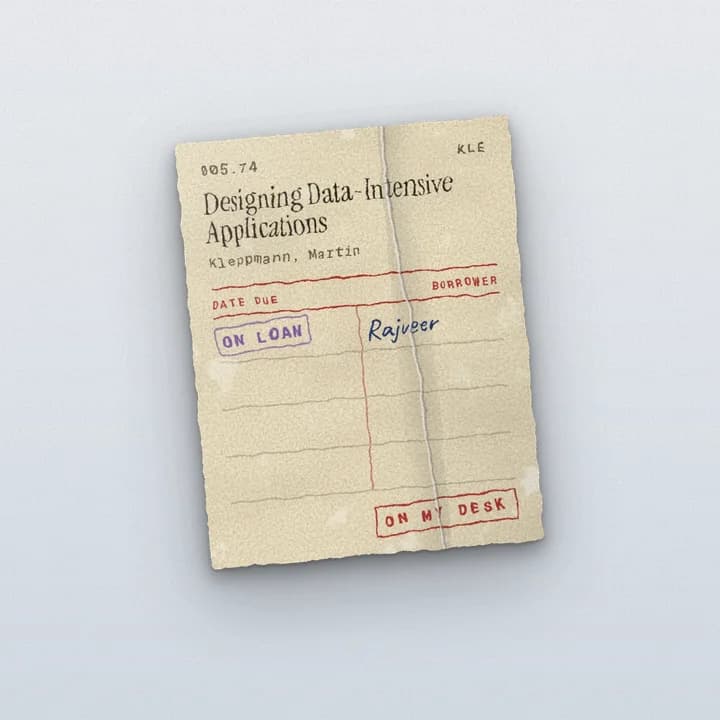
the book on my desk 
sherlock holmes
01Story
How I got here
I started in July 2024 with Harkirat Singh’s 100xDevs cohort and shipped my first project two weeks later. The first thing strangers used was 10xanswers, an AI chat component I published to npm that December. In 2025, Safire, a harassment shield I built with friends, won HackWIE 3.0 and Code Kshetra 2.0. Then I built Modulus’s product UI and most of Wii Hop’s frontend, and a take-home called Kernel led to my job at IABTM. In 2026, the same team built HyperPersona for Cognizant’s Technoverse hackathon.
Before all that, I was learning. I wrote Python on a phone through lockdown because I didn’t have a laptop. The one thing from then that mattered was a bill calculator for my father, who logged our electricity meter in a paper diary. It ran on 22 months of his readings, and it was the first time something I wrote did a real job for someone.
I like the two ends of the stack most: the interface, where every detail is a decision, and the infra, where things either stay up or they don’t. The first end has been pulling harder lately: I’ve been exploring design engineering, designing in code down to the motion and the sound, and this site is where I practise it. AI goes in the middle, treated like any dependency that can fail.
02Timeline
The road so far
- Jul 2024Joined the 100xDevs cohort
- Dec 2024Published 10xanswers to npm
- Jan 2025First place at HackWIE 3.0
- Feb 2025First place at Code Kshetra 2.0
- Apr 2025Frontend engineer at Modulus
- Jul 2025Software engineer at Wii Hop
- Sep 2025Software engineer at IABTM
- May 2026Top 0.1% of 22,000+ at Cognizant Technoverse 2.0
03What I build
The details I sweat
- 01
Interfaces
Fast, accessible front ends in React and Next.js, with keyboard paths, focus handling and reduced motion built in from the start. I did most of the accessibility work in IABTM’s app.
- 02
Backends and data
APIs in Node and Express over MongoDB, Postgres and Redis, with indexes checked against real query plans, pages that scroll by cursor, and webhooks that verify their sender and never count an event twice.
- 03
Realtime
Voice rooms on a mediasoup SFU, chat, presence and live notifications over WebSockets, and WebRTC calls where the server only makes the introduction.
- 04
AI in the product
Models treated like any dependency that can fail: they choose from a list rather than invent, fall back to plain code, stop at the first rate limit, and never write a member’s words into telemetry.
- 05
Scale
Ready for more servers before a product needs them: caches and sockets shared through Redis, scheduled jobs that claim their turn so each runs once, and duplicates stopped by the database, not by memory.
- 06
Infrastructure
AWS from the box up: EC2 behind nginx and PM2, media on S3 behind CloudFront, uploads of up to 2 GB sent straight from the browser to S3 in parallel parts that retry on their own, and a release tag to roll back to.
- 07
Speed
Pages that answer before their heaviest part arrives: work moved off the main thread, feeds served from a cache, code and images sent only where they show. The lake on this site paints in a worker and costs nothing off screen.
- 08
Search and sharing
SEO as a system: one metadata builder behind every route, structured data, a share image drawn for each page, and a sitemap that leaves things out on purpose. This site scores 100 for SEO in Lighthouse.
- 09
Keeping it running
Uptime checks, error tracking, model telemetry and alerts that reach the team within the hour, and failures fixed as a class, so the same one cannot happen quietly again.
04What I bring
The part the tools don’t do
Everyone has the same AI tools now, and I use them every day. What they can’t give you is knowing what’s worth making, seeing when it isn’t good yet, and caring enough to finish it.
That part is mine. I see the thing before it exists, and I keep going until the real one matches it. The lake on the home page is a live simulation running on your GPU, and it still lets the page load first.
05How I work
What I hold to
- 01
Idea to production
Design it, build it, ship it, then watch it run and keep it up.
- 02
Read before changing
I read a codebase before I touch it, and write down what I find: audits, runbooks, decision records.
- 03
Leave a way back
Release tags, kill switches, and migrations that start as dry runs.
- 04
Fix the class of bug
Not the instance. If something failed silently once, it shouldn’t be able to again.
06Off-screen
When I’m not coding

Chess
Chess, when I’m away from the screen. Same habit as debugging: read the whole board before you move.
Matiks
Timed mental-maths duels on Matiks, against strangers. No calculator, and no hiding.

Investing
I invest a little. Compounding is the whole idea, in code and out of it.

Sherlock Holmes
The books, the films and the series. For the method, not the mystery: notice what everyone skips, and stay calm on the clock.
Chess and Matiks scratch the same itch as a hackathon: putting myself on a clock, on purpose, to find out where the edge is.
07Contact
Say hello
Rajveer Singh
Software engineer, New Delhi
- Emailrajveergreets@gmail.com
- CallPick a time
- RésuméView itDownload
- GitHub@rajveeerr
- LinkedInin/rajveeerr
- X@rajveeerrsingh
Open to conversations.